
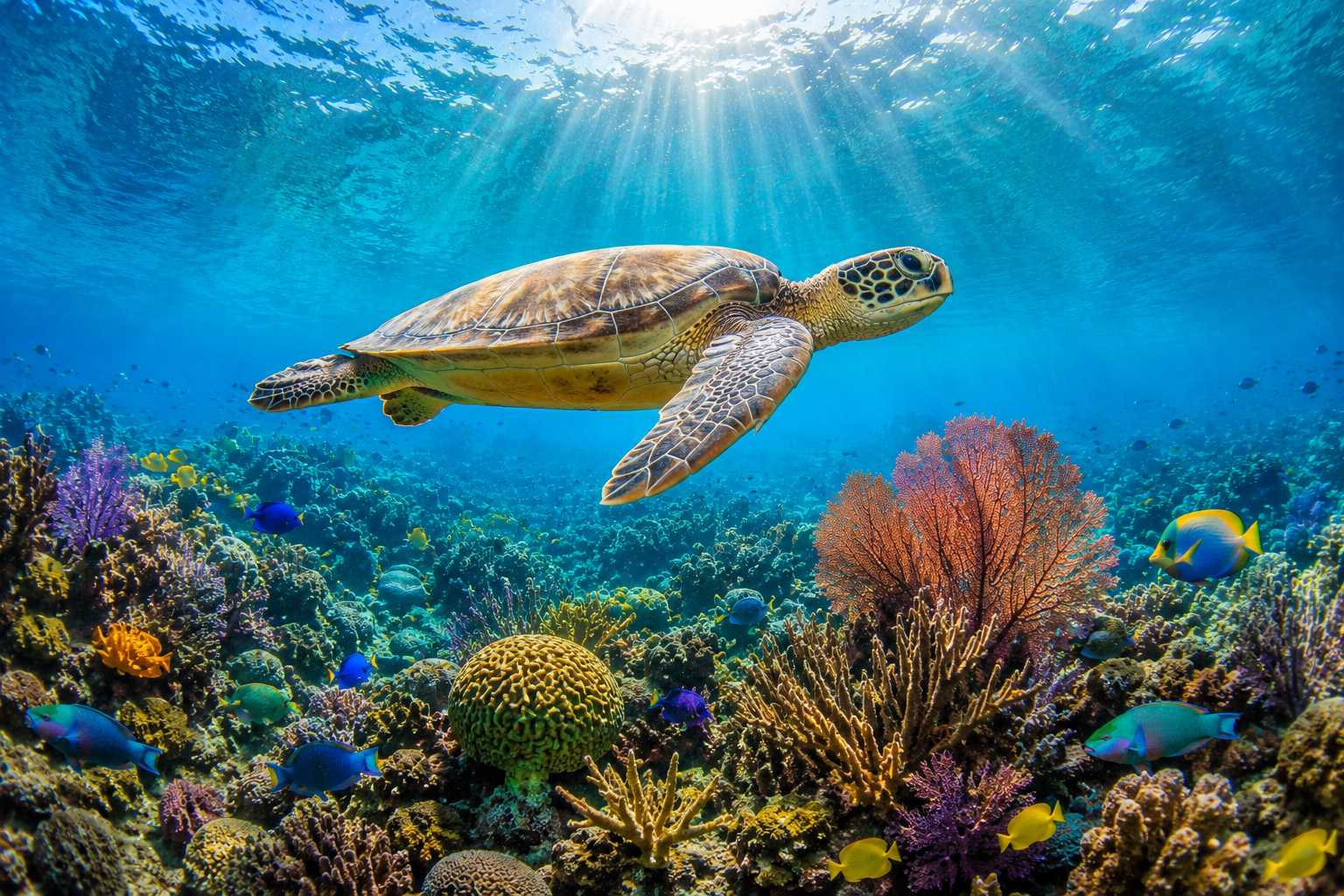
A Reef That Shapes an Entire Country
Belize is a small country with an outsized marine identity. From Ambergris Caye in the north to the Sapodilla Cayes in the far south, the barrier reef lies just beyond the mainland coast and forms a long protective edge between the shallow continental shelf and the deep Caribbean. In some places it feels close and intimate, reached within minutes by boat. In others it opens into a much larger offshore world of atolls, blue water, and isolated cayes.
The reef's importance is ecological, economic, cultural, and practical. It supports fisheries, tourism, coastal protection, and an extraordinary range of habitats. It also explains much of Belize's geography: the sheltered waters behind the reef, the chain of cayes, the mangrove islands, the seagrass flats, and the famous diving and snorkeling sites are all parts of the same interconnected system.
The UNESCO Belize Barrier Reef Reserve System
In 1996, UNESCO inscribed the Belize Barrier Reef Reserve System as a World Heritage Site. The designation does not cover every kilometer of reef. Instead, it protects seven representative areas that together preserve the remarkable variety of reef forms and coastal ecosystems found in Belize.
The seven protected components account for only part of the wider reef complex, but they capture its most important ecological patterns: barrier reef, offshore atolls, cayes, mangroves, seagrass beds, lagoons, deep channels, and nesting habitats. Together they demonstrate why Belize's marine environment is globally important rather than simply beautiful.
The reef was placed on UNESCO's List of World Heritage in Danger in 2009 amid concerns about development and protection. It was removed from that list in 2018 after Belize strengthened conservation measures. That history matters because World Heritage status brings continuing scrutiny and a responsibility to balance tourism, fisheries, and development with long-term protection.
The reef is a network of coral, mangroves, seagrass, cayes, lagoons, and deep-water habitats rather than a single coral wall.
Why the Belize Reef Is So Unusual
What makes Belize exceptional is not simply the length of the reef. It is the concentration of different reef types and habitats in one connected region. The system includes fringing and barrier reefs, patch reefs inside the lagoon, reef channels, coral pinnacles, offshore atolls, mangrove cayes, seagrass meadows, coastal lagoons, and estuaries.
These habitats function together. Mangrove roots shelter juvenile fish. Seagrass beds provide feeding grounds for turtles and other marine life. Shallow coral gardens support reef fish and invertebrates. Reef channels connect lagoon and ocean habitats, while the outer reef drops into much deeper Caribbean water. The ecological value comes from the network, not from coral alone.
The system supports hundreds of fish species, dozens of hard coral species, hundreds of molluscs, and a broad diversity of sponges, hydroids, crustaceans, marine worms, and plant life. Threatened species associated with the system include green, hawksbill, and loggerhead turtles, West Indian manatees, and American crocodiles.
Northern Reef: Ambergris Caye, Hol Chan and Shark Ray Alley
For many visitors, the most accessible introduction to the Belize Barrier Reef begins in San Pedro on Ambergris Caye. The barrier reef runs close to the island, and boats can reach shallow snorkeling and diving sites quickly. This combination of accessibility, clear water, and abundant marine life is one reason the northern reef has become Belize's best-known marine tourism region.
Hol Chan Marine Reserve
Hol Chan means "Little Channel" in Maya and refers to a natural cut through the barrier reef south of San Pedro. Belize established Hol Chan in 1987 as its first marine reserve. The protected area now includes coral reef, seagrass beds, mangroves, and Shark Ray Alley, creating a compact demonstration of how the reef's different habitats connect.
For snorkelers, Hol Chan is valuable because the experience is not limited to looking down at coral. Fish move through the channel, rays cross sandy areas, turtles may appear over seagrass, and the reef structure changes noticeably over a short distance. It is one of the easiest places in Belize to understand the reef as an ecosystem rather than as a single attraction.
Shark Ray Alley
About a mile south of the Hol Chan cut, Shark Ray Alley forms part of the reserve and became known for nurse sharks and southern stingrays after fishermen historically cleaned their catch there. Today it is one of Belize's most famous wildlife encounters, with snorkelers commonly seeing nurse sharks, rays, turtles, and reef fish in shallow water.
Belize's Three Offshore Atolls
Beyond the barrier reef lie three major offshore atolls: Turneffe, Lighthouse Reef, and Glover's Reef. Their presence is one of the features that separates Belize from most Caribbean destinations. These are not simply islands surrounded by coral. They are large reef systems with lagoons, channels, patch reefs, walls, cayes, mangroves, and deep ocean around them.
Turneffe Atoll
Turneffe is the largest of Belize's offshore atolls and the closest to the mainland. Its maze of mangrove cayes, lagoons, channels, reefs, and flats supports diving, fishing, birdlife, and nursery habitat. Divers come for walls, coral formations, and marine life, while the mangrove-fringed interior shows another side of Belize's marine environment.
Lighthouse Reef and the Great Blue Hole
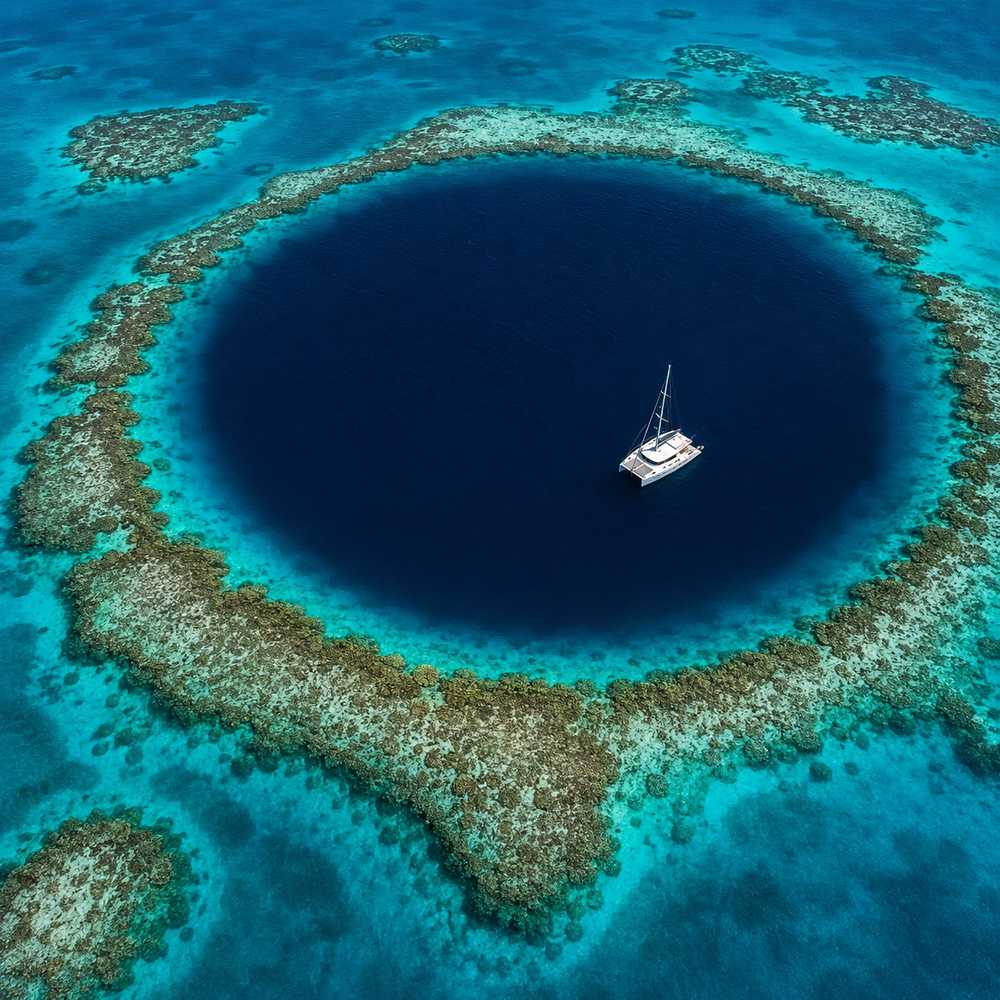
Lighthouse Reef is the easternmost atoll and home to Belize's most internationally recognized marine landmark, the Great Blue Hole. From the air it appears as an almost perfect dark-blue circle set inside pale turquoise water. Geologically, it is a giant marine sinkhole formed from a limestone cave system that was flooded as sea levels rose.
The Blue Hole is famous, but travelers should understand what kind of experience it offers. It is primarily a dramatic geological dive rather than Belize's richest shallow coral site. The descent is about depth, scale, limestone formations, and the abrupt transition into blue water. Many divers find the nearby reefs and walls of Lighthouse Reef more colorful and biologically varied.
Half Moon Caye
Also within Lighthouse Reef, Half Moon Caye combines reef scenery with an important terrestrial habitat. Its red-footed booby colony is one of the island's conservation highlights, while the surrounding waters offer walls, coral formations, and clear-water diving and snorkeling.
Glover's Reef
Glover's Reef is a large offshore atoll southeast of the mainland and one of the seven UNESCO components. It offers a more remote experience than the heavily visited northern reef, with deep channels, coral pinnacles, lagoon reefs, walls, and extensive protected waters. Its distance from major tourism centers is part of its character.
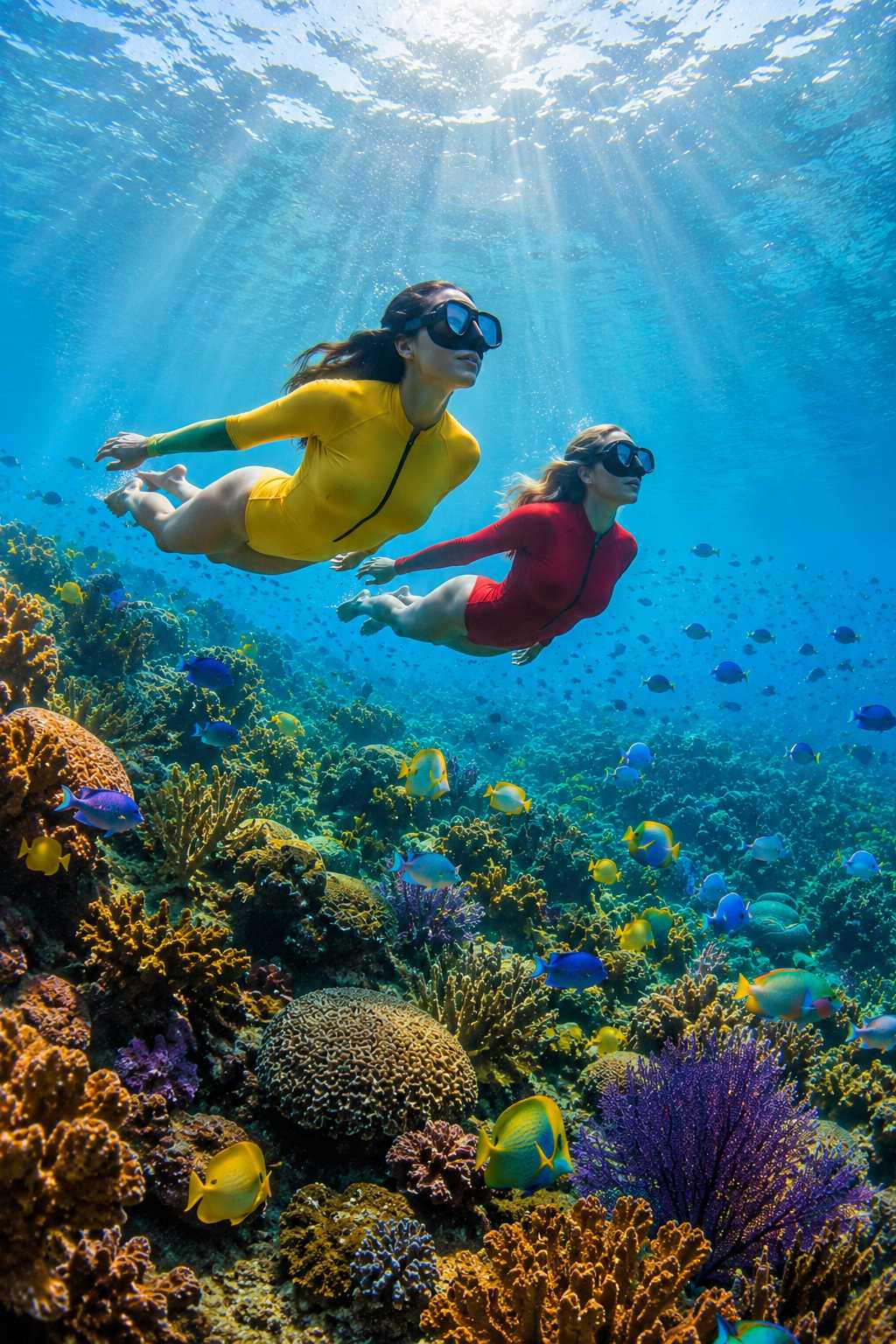
Belize offers everything from shallow reef snorkeling to offshore wall diving and deep-water geological sites.
The Southern Reef and Cayes
South of Belize City, the reef becomes less dominated by a single tourism hub and more closely connected to a chain of mainland communities and smaller cayes. Dangriga, Hopkins, Placencia, and southern coastal villages provide access to marine reserves that often feel quieter than the better-known sites near San Pedro.
South Water Caye Marine Reserve
South Water Caye Marine Reserve is the largest of the seven UNESCO components by listed area. It protects reef, mangrove, seagrass, and caye habitats in a region where the barrier reef approaches small islands closely enough to create excellent snorkeling access. The reserve is important not only for tourism but also for the ecological links between mangroves, seagrass, and coral.
Laughing Bird Caye
Laughing Bird Caye National Park lies offshore from Placencia and protects a small island and surrounding reef environment. It is a popular day-trip destination for snorkeling and is part of the UNESCO World Heritage system. Its appeal is the combination of a small Caribbean caye, shallow reef habitat, and relatively straightforward access from the southern coast.
Sapodilla Cayes
Near Belize's southern maritime border, the Sapodilla Cayes are among the country's most remote protected reef areas. The distance from the major tourism centers makes them less accessible, but the region is important for reef conservation, fisheries, and the ecological continuity of the southern Belize reef.
What You May See Underwater
No reef trip can guarantee a particular animal, but Belize supports an unusually broad range of Caribbean marine life. In shallow areas, snorkelers commonly look for parrotfish, angelfish, butterflyfish, grunts, snappers, barracuda, rays, nurse sharks, and sea turtles. Divers may encounter larger pelagic species, groupers, reef sharks, eagle rays, and other animals depending on location, depth, season, and luck.
Coral itself is the foundation of the experience. Brain corals, star corals, elkhorn and staghorn formations, sea fans, sponges, and other reef-building organisms create the structure that shelters fish and invertebrates. Healthy reef tourism begins with recognizing that coral is alive and grows slowly.
Snorkeling the Belize Barrier Reef
Belize is unusually rewarding for snorkelers because many reef experiences take place in relatively shallow water. Hol Chan and Shark Ray Alley are the best-known examples, but shallow coral gardens, patch reefs, seagrass beds, and caye drop-offs can be found throughout the country.
First-time snorkelers should prioritize a guided trip in protected, relatively calm water. A good guide does more than point out fish. Guides read current, boat traffic, wind, entry points, and reef rules. They also help visitors identify animals without approaching too closely.
Scuba Diving: From Shallow Reefs to Blue Water
Belize's diving range is one of its greatest strengths. New divers can find shallow reefs and gentle coral formations, while experienced divers can explore walls, deeper channels, atolls, and blue-water sites. Ambergris Caye provides easy day diving, while Lighthouse Reef, Turneffe, and Glover's Reef reward travelers willing to spend more time offshore.
The Great Blue Hole attracts global attention, but it should not overshadow the rest of Belize's diving. If colorful coral, reef fish, and varied topography are the priority, many divers find the outer walls, atoll reefs, and marine reserves more visually rewarding than the Blue Hole itself.
How to Choose the Right Base
- San Pedro, Ambergris Caye: best for easy access to Hol Chan, Shark Ray Alley, frequent reef trips, and a large choice of dive operators.
- Caye Caulker: a smaller, slower-paced island base with straightforward access to northern reef snorkeling and diving.
- Belize City: useful as a departure point for some offshore trips, especially Turneffe and Lighthouse Reef, though many leisure travelers prefer staying on the cayes or coast.
- Hopkins and Dangriga: good gateways to the central reef, South Water Caye, and nearby marine reserves.
- Placencia: a strong southern base for Laughing Bird Caye, southern reef sites, and longer excursions toward more remote cayes.
When to Visit
The reef can be visited throughout the year, but conditions depend on wind, rain, sea state, and tropical weather. Belize's drier months generally bring more predictable conditions, while the wetter season can still produce excellent days on the water between periods of rain.
For reef travel, daily marine conditions matter more than a simple calendar rule. A calm morning in the wetter season may be better than a windy day in the dry season. If snorkeling or diving is a central reason for your trip, leave some flexibility in the itinerary rather than assigning one fixed day to the reef.
A World Heritage Site Under Pressure
The Belize Barrier Reef is protected, but it is not invulnerable. Climate change, coral bleaching, stronger storms, sea-level rise, coastal development, tourism pressure, pollution, and overharvesting of marine resources all affect the system.
Coral bleaching is particularly serious because prolonged heat stress can cause corals to expel the algae that provide much of their energy. Bleached coral is not necessarily dead, but repeated or severe events reduce resilience. Hurricanes can physically damage reefs, while sediment, pollution, and poorly managed coastal development can add local stress.
Conservation therefore depends on more than marine reserve boundaries. Mangroves, seagrass, fisheries management, coastal planning, water quality, responsible tourism, and community livelihoods all influence the health of the reef. The most resilient future for Belize's reef is one in which the entire coastal system is treated as connected.
Responsible tourism matters because coral reefs are living ecosystems vulnerable to physical damage, warming seas, pollution, and overuse.
How to Visit Responsibly
- Do not touch, stand on, or kick coral with fins.
- Keep a respectful distance from turtles, sharks, rays, and other wildlife.
- Do not remove shells, coral, or other marine material.
- Use moorings rather than anchoring on coral whenever established moorings are available.
- Choose licensed operators that follow marine reserve rules and brief guests before entering the water.
- Take all litter back to shore and reduce single-use plastics where practical.
- Respect closed zones, no-take areas, and ranger instructions.
The Best Way to Understand the Reef
The most memorable way to experience the Belize Barrier Reef is not to treat it as one famous dive or one postcard view. See several parts of the system. Snorkel a shallow reserve. Cross seagrass flats. Pass mangrove cayes. Dive or boat beyond the barrier into deep blue water. Visit an atoll if time allows. The contrast explains why this ecosystem is globally important.
Hol Chan shows the reef at human scale. Lighthouse Reef shows its geological drama. Glover's Reef reveals the remoteness of an offshore atoll. South Water Caye demonstrates the links between coral, seagrass, mangroves, and islands. Together, these places turn the phrase "Belize Barrier Reef" from a tourism slogan into a living map.
Visit Belize Collection
Belize Barrier Reef Secrets
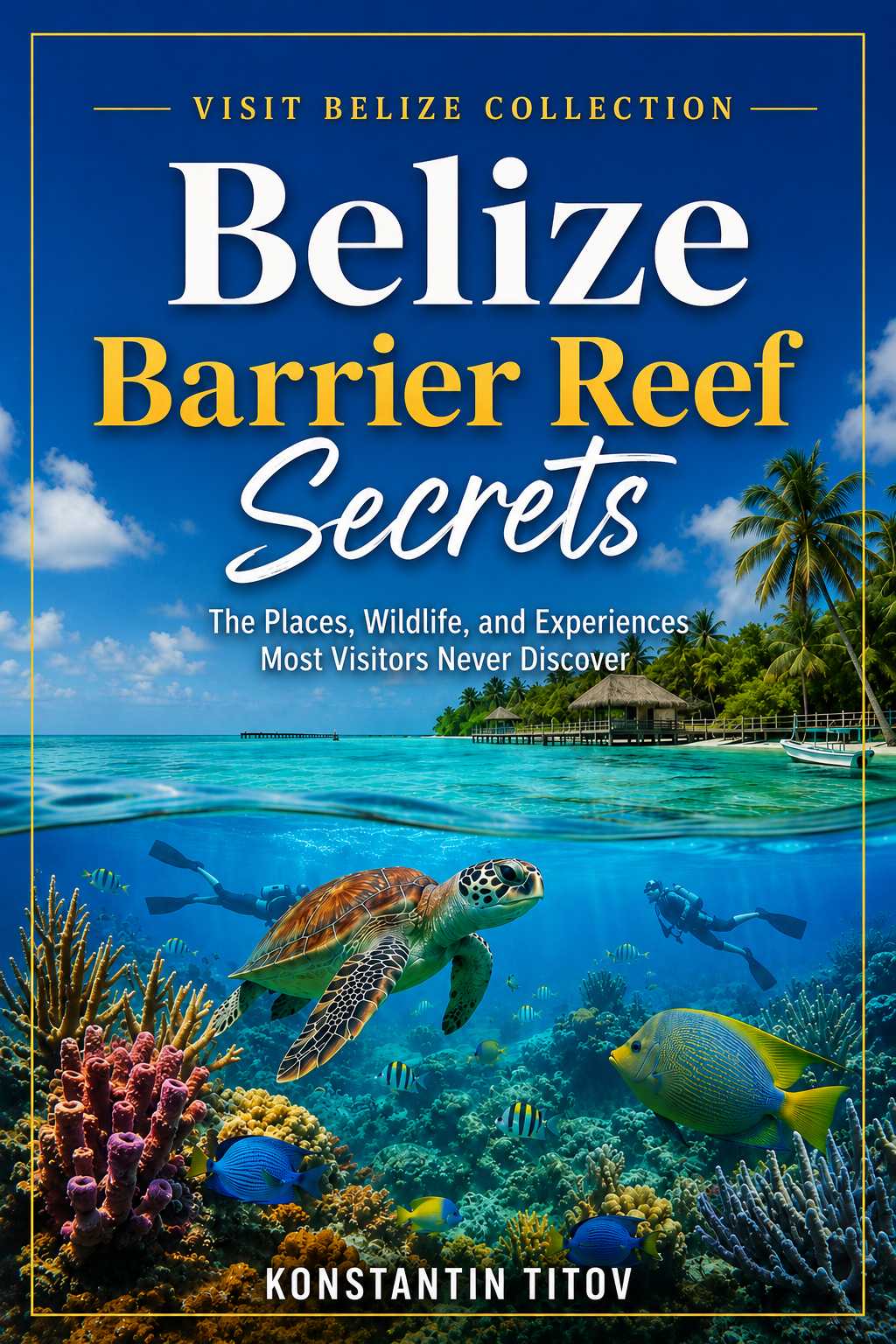
The places, wildlife, and experiences most visitors never discover. Stop guessing and start exploring with the ultimate insider's guide. Packed with detailed maps, secret snorkeling spots, and expert advice for your trip.
Only $9.99 on AmazonBUY ON AMAZON
Frequently Asked Questions
How long is the Belize Barrier Reef?
The reef extends for roughly 185 miles along Belize's Caribbean coast and forms part of the wider Mesoamerican Reef system.
Is the whole reef protected by UNESCO?
No. The UNESCO Belize Barrier Reef Reserve System consists of seven protected areas representing only part of the wider reef complex.
Where is the best snorkeling?
Hol Chan Marine Reserve and Shark Ray Alley are the most accessible famous sites, especially from San Pedro and Caye Caulker. South Water Caye and Laughing Bird Caye are excellent alternatives farther south.
Is the Great Blue Hole the best dive in Belize?
It is the most famous, but not necessarily the best for coral or marine-life diversity. Its appeal is geological scale and depth. Many divers prefer nearby walls and reefs for color and biodiversity.
Can non-divers enjoy the reef?
Absolutely. Belize is one of the Caribbean's strongest snorkeling destinations, with shallow reef, seagrass, caye, and marine-reserve experiences suitable for non-divers.